

Autumn on the Tyne: Where to Watch Salmon Leaping and How to Do It Responsibly
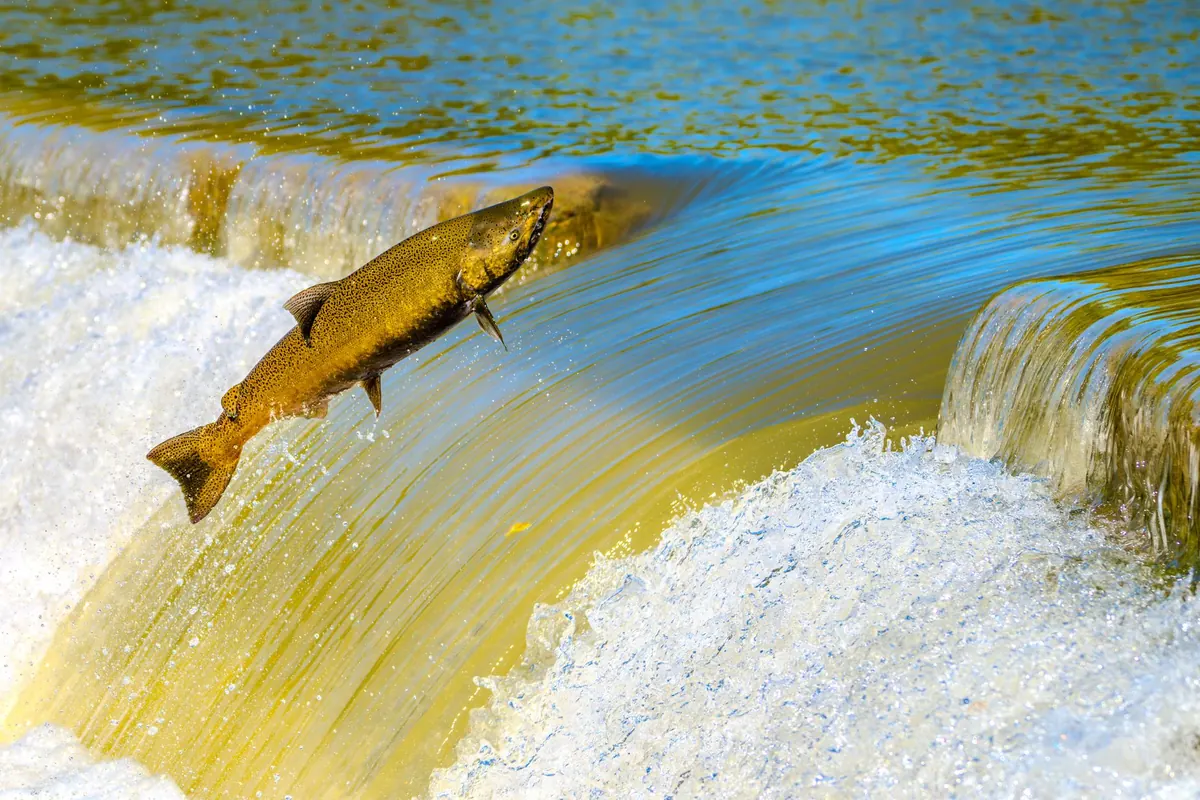
Autumn on the Tyne has a soundtrack. After a night of rain, the river lifts and cools, and somewhere below the weir you hear a slap of water that doesn't fit the current. Then another. Salmon are on their way upstream, and for a few weeks the river gives you a front-row seat — if you know where to stand, when to go, and when to walk away.
The migration is a long, exhausting journey. These fish have spent years at sea and burned most of their reserves getting back to the river. Everything you do at the water's edge either adds to that cost or takes nothing from it. This guide covers likely viewing spots on the Tyne and its tributaries, how to time a visit, and the habits that separate a careful watcher from a disturbance.
Start with the river's mood, not the clock
Salmon move on water. A spate — a rise after rain — is the single best prompt. Fish will run upstream through a freshening river, often within a day of the colour dropping out and the level stabilising. Gin-clear summer levels with no rain for a fortnight usually mean a quiet watch and a lot of standing around.
What you want is a river that has come up and is starting to fall. Not brown and bank-high, but rising to falling with a bit of peat stain still in it. Check the level before you leave the house rather than after you've driven an hour. Local river-level gauges update frequently, and comparing today's reading with the past few days tells you more than any forecast.
Time of day matters less than conditions, but early morning and the last hour of light often produce movement. Fish are also more willing to run under low light and in the drizzle that sends most of us home.
Where to look on the Tyne
Salmon leaping happens where the river is funnelled, steepened or blocked. That means weirs, natural rock steps, gorge sections and the mouths of tributaries pushing in cooler, cleaner water. You don't need a secret spot. You need to read water.
Anywhere on the main Tyne where the flow narrows and accelerates will hold fish resting before they push on. Below weirs, look for the crease where fast water meets slow — salmon often hold there for hours, then make a run. In gorge stretches, watch the tails of pools and the thin sheets of water sliding over rock ledges.
On the North Tyne, the reaches around Bellingham and Wark reward patience, particularly where the river braids around gravel and tree cover gives you a bank to hide behind. The South Tyne around Haltwhistle and Featherstone offers similar water, shallower and quicker to rise. Tributaries such as the Rede, the North Tyne's upper feeders and the Allen can fish well after rain when the main river is still too big — though access and wading there are best left to people who know the ground.
What you're looking for, in any of these places, is a lie: a slot of deeper water, a boil against a rock, a line of white where a fish has just cleared a ledge. Mark two or three of these on a walk and return to them.
Water worth a longer look
- Weir pools. Fish stack up below obstructions and leap repeatedly. Easy to watch, easy to disturb — keep your distance.
- Rock ledges and natural steps. Often the most spectacular leaping, and the least obvious. Look for white water with a dark plunge pool beneath.
- Pool tails. Where fast water slows into a pool, resting fish sit in the seam. Flickering shapes at the edge of visibility are often salmon, not debris.
- Tributary mouths. Cooler, oxygenated water draws fish in. Good in warm autumns when the main river runs low.
- Gravel shallows upstream of spawning areas. View from the bank only. These are the redds, and they matter more than your photograph.
How to watch without disturbing
Salmon are alert to shadow, vibration and sudden movement. A fish that spooks may drop back a pool, waste energy, or abandon a run entirely. Low disturbance is mostly about being boring: still, quiet, and slightly hidden.
Approach the bank from behind cover where you can, and stop short. Sit or crouch rather than stand on the skyline. Wear muted colours; bright jackets show up against gravel and sky. Polarised sunglasses cut glare and let you see into the water from a position that isn't right on top of the fish — they make more difference than binoculars for this kind of watching.
Binoculars are still useful for weirs and big pools where you can observe from a distance. If you must move closer, do it slowly and in stages, pausing between each. If fish stop moving, you've gone far enough.
Rules of thumb at the water's edge
- Watch from the bank. Don't wade, don't stand in the shallows, don't enter the channel.
- Stay off gravel beds and redds. Spawning salmon and their eggs sit in loose gravel that compacts under a boot — and it can be next to invisible under broken water.
- Keep dogs out of the river and under control. A swimming dog clears a pool faster than anything.
- Leave nothing. Line, hooks, litter and food waste end up in the water or in a fish's gut.
- Photograph with available light and a bit of reach. Flash and repeated close approaches add stress for no benefit.
- If someone is fishing a pool, move on. Give them room and take your watching downstream.
Salmon fishing on the Tyne is managed by local angling clubs and by the Environment Agency, and rules differ by stretch and by season. If you plan to fish rather than watch, check the current byelaws and any club permits before you go — and if you're unsure, ask the nearest tackle shop or club secretary. For watching only, you generally need nothing more than permission to be on the land, which on much of the Tyne comes free with a public footpath.
What you're actually watching for
The leap is the obvious spectacle, but the migration is more than jumping. Look for dark shapes holding in a pool and then sliding forward a metre at a time. Watch for the "bow wave" of a fish running shallow, or a tail breaking the surface as one climbs a ledge. Sometimes a salmon clears a weir first attempt. Often it takes a dozen tries, dropping back each time, and that persistence is the real story.
Later in the season, fish pair up over gravel. Don't crowd them. A redd being cut by a hen fish is the next generation of the river, and it is the single most fragile thing you'll see all autumn.
Be aware that fish move through a stretch in days, not weeks, so conditions can change fast. Keep your expectations low and your patience high. The best days are often the ones where someone else's day went quiet.
Practical notes before you set off
Check the river level and the weather the morning you go, and again before you commit to a long drive. Take a waterproof, warm layers, and footwear you're happy to get muddy on a bank rather than in the water. Carry a torch if you're staying for dusk, and tell someone where you're going — banks under trees get slippery fast in autumn, and phone signal is patchy along parts of both Tyne valleys.
Give yourself a couple of hours minimum. The best sighting usually comes after you've stopped expecting one. And if the fish aren't showing, walk upstream and enjoy the leaf colour, the dippers and the last of the season's light on the water. The salmon will still be there tomorrow, doing what they've done for thousands of years.
Photo: Héctor Berganza / Pexels